

The orchestra, conducted by Music Director Zeke Fetrow, performs a program of Zoltan Kodaly’s Dances of Galanta, Nino Rota’s Concerto for Bassoon, Johannes Brahms’ Hungarian Dance No. 5, and Aaron Copland’s Appalachian Spring. Richard Svoboda joins the orchestra to perform Nino Rota’s Concerto for Bassoon A pre-concert talk is scheduled for 7:15pm. Admission for youth under 18 is free.
Zoltan Kodaly composed the Dances of Galanta in 1933, based on folk melodies he heard in his youth. An ethnomusicologist as well as a composer, Kodaly visited remote villages in Hungary to collect folk songs. Johannes Brahms’ Hungarian Dance No. 5 is one of a set of 21 lively dance tunes based mostly on Hungarian themes, completed in 1879.
Nino Rota (1911–1979) completed the Concerto for Bassoon in 1977. Rota is best known as a film composer, producing greater than 150 scores. His score for Godfather Part II won the Academy Award in 1974. In addition to his works for film, he wrote ballets, operas, symphonies, chamber music, and concertos. The Concerto for Bassoon begins with a Toccata and Recitativo, and its finale is a light-hearted set of variations on a theme.
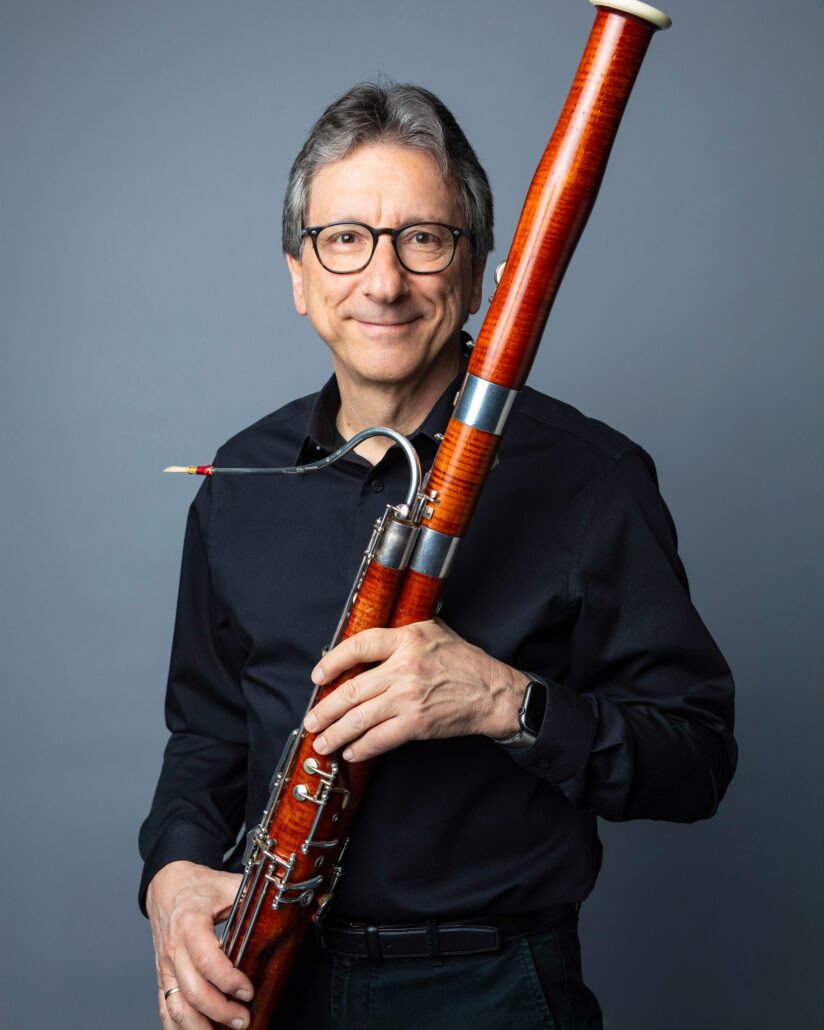
Bassoon soloist Richard Svoboda has been the principal bassoonist of the Boston Symphony Orchestra and a member of the Boston Symphony Chamber Players since 1989. He is currently on the faculties of the New England Conservatory of Music and the Tanglewood Music Center, taught for many years at the Sarasota Music Festival, and has given master classes throughout the world.
Aaron Copland’s Appalachian Spring was originally music for a ballet composed for 13 instruments. The version performed is for full orchestra. According to Copland, the ballet tells the story of “a celebration of the first settlers in springtime around a newly-built farmhouse in Pennsylvania in the early 19th century.”